

How To Draw Waves Breaking On The Beach
How to draw LIQUID MOVEMENTS and Bounding main WAVES

Join The Etherington Brothers and acquire how to describe moving water and waves! Learn how liquid poured into a glass moves and how waves are made with detailed illustrations, then pinnacle it off with natural splashes!
Learn how y'all can depict… or learn how to Retrieve when y'all DRAW with the Etherington Brothers!

i. Pouring liquid
Pouring liquid has two main movements: the stream of liquid itself, and the fashion in which it churns and pools on whatever surface it hits.
Let'due south await at liquid pouring into a glass…
- Uneven stream snakes down.
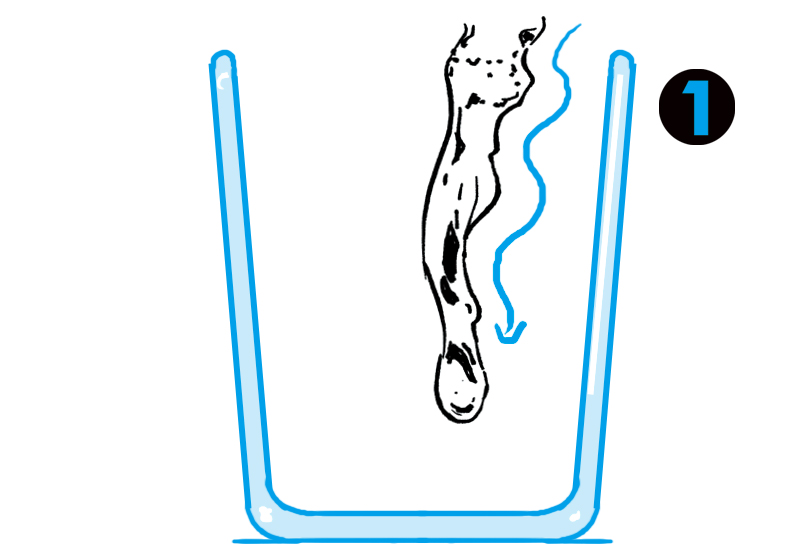
- Stream leng thens, edges smooth out.
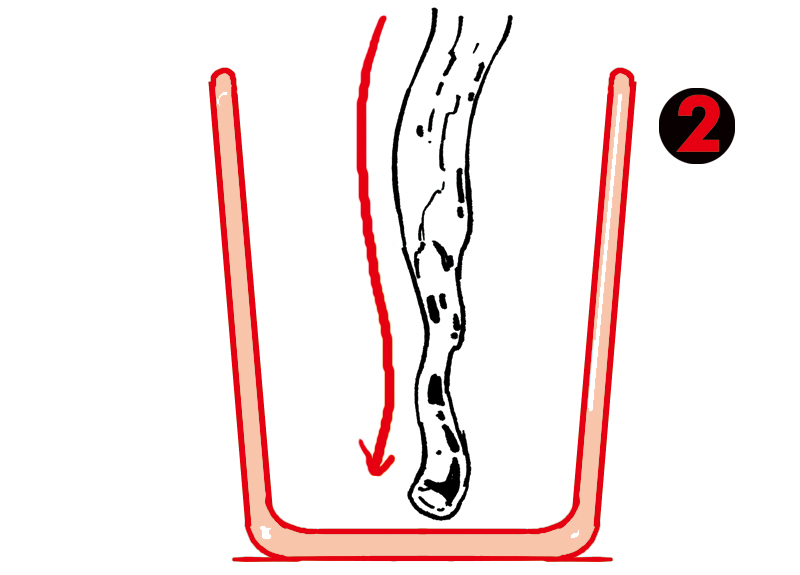
- Liquid hits, initial splash fans out in all directions.
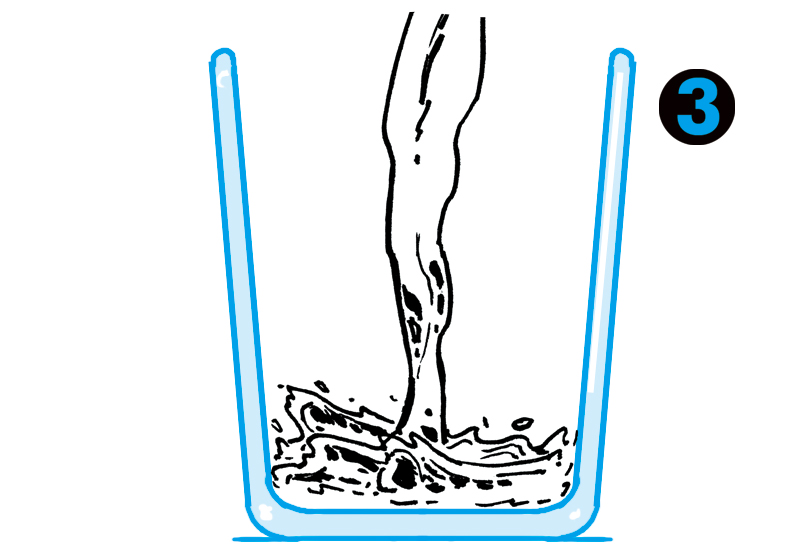
- Bending of liquid stream causes splash to favour one side of glass.
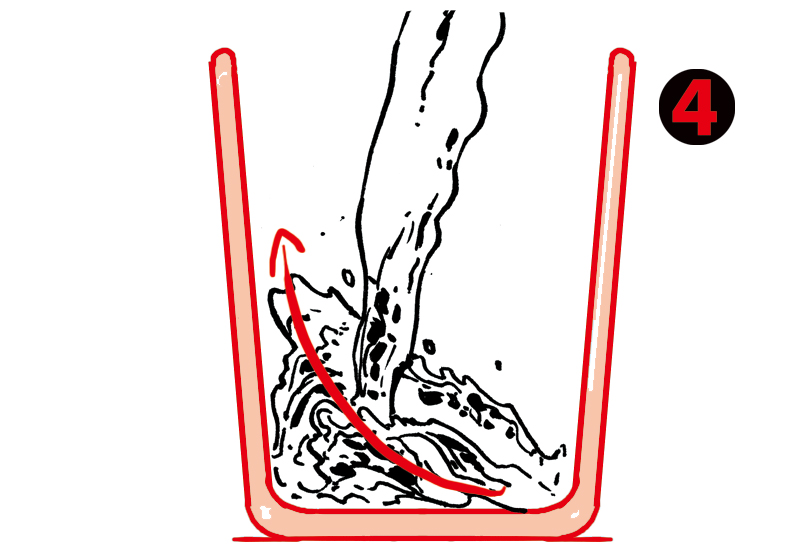
- Splash breaks confronting side of glass.
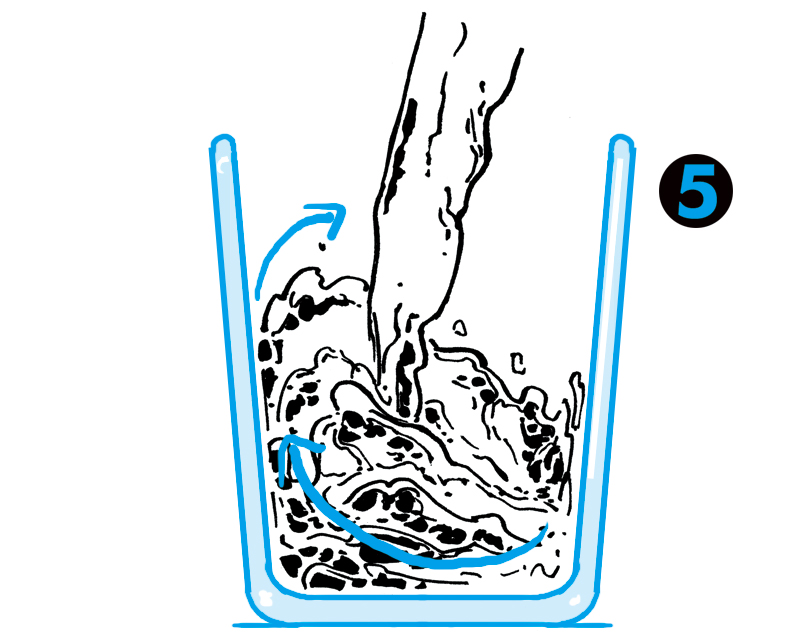
- Equally puddle gets deeper, surface lines become smoother.
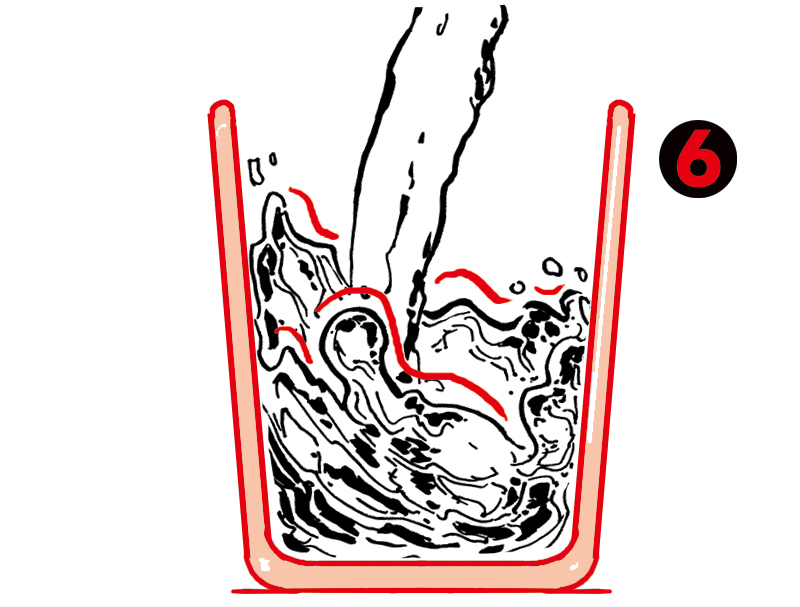
- Liquid crests up sides and falls in on itself.
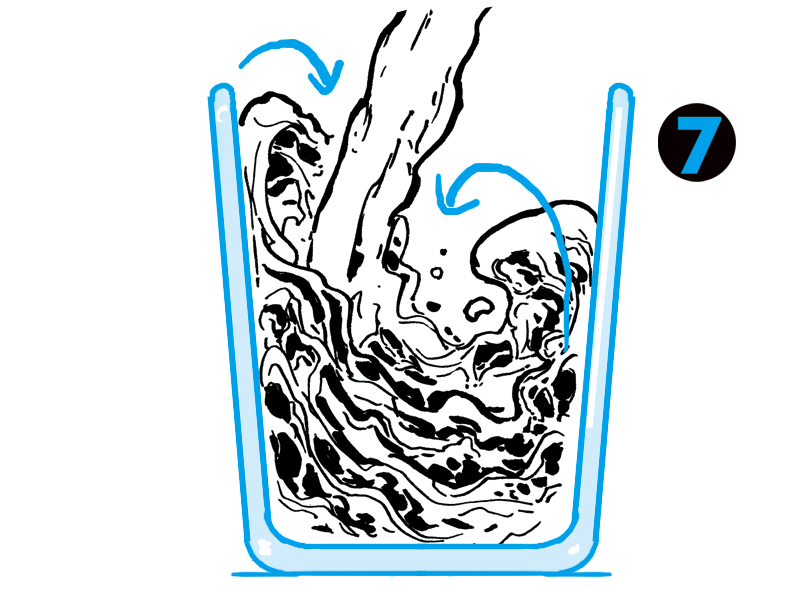
- Liquid continues to crest and summit, from side to side.
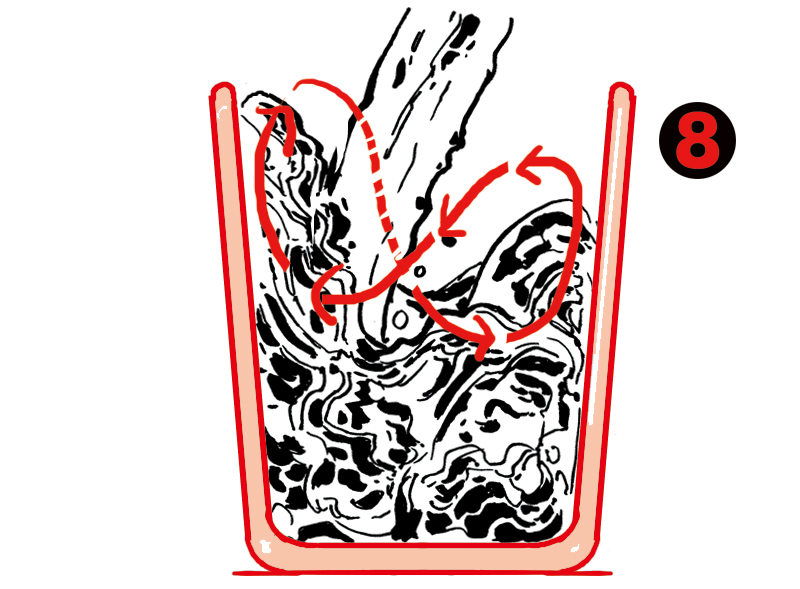
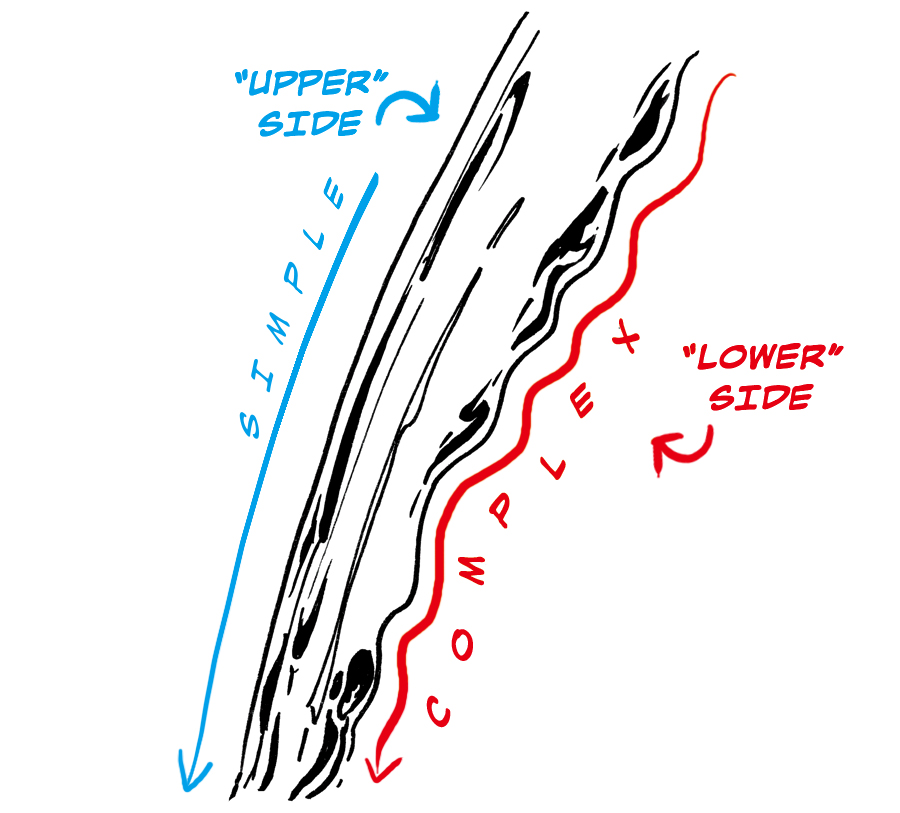
A stream of liquid has both a simple and a circuitous side.
The simple / complex rule applies to some caste no matter in which direction the water is sprayed.
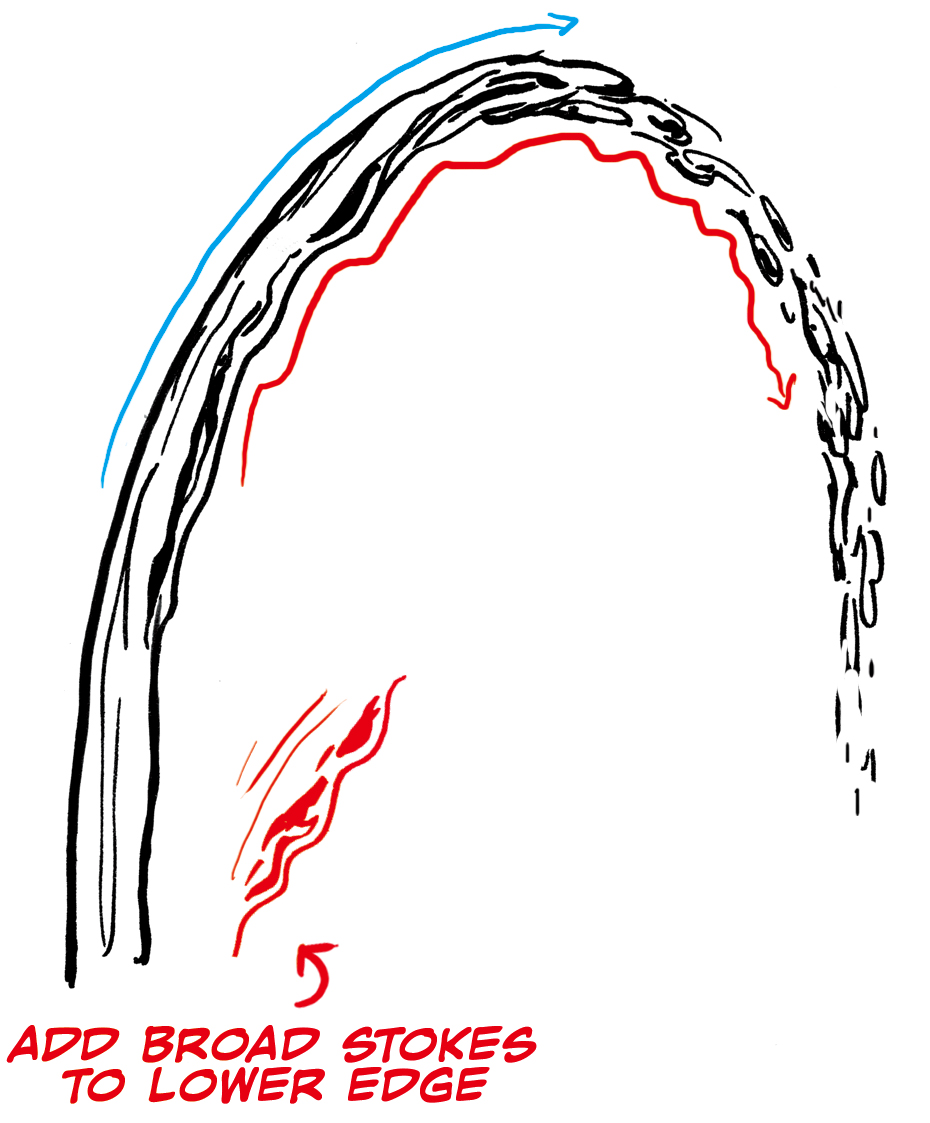
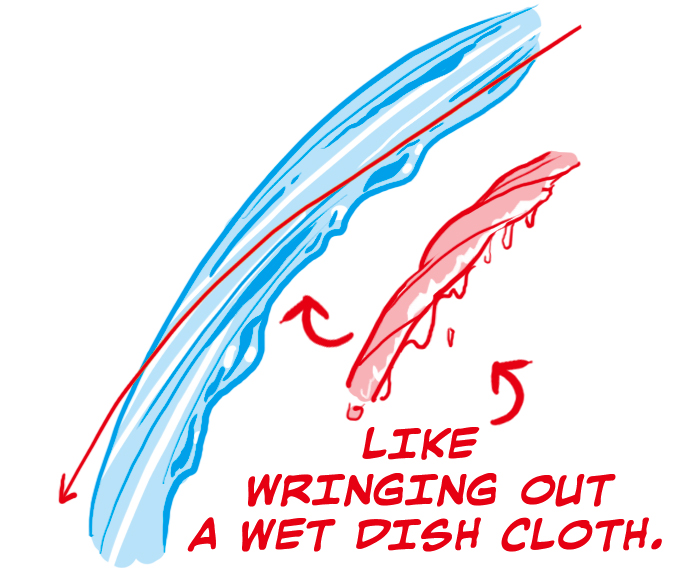
Imagine that the lower side is trying to turn into aerosol.

As water pours from a height, it gently twists.
When liquid hits a pool, at commencement it "tunnels downward".
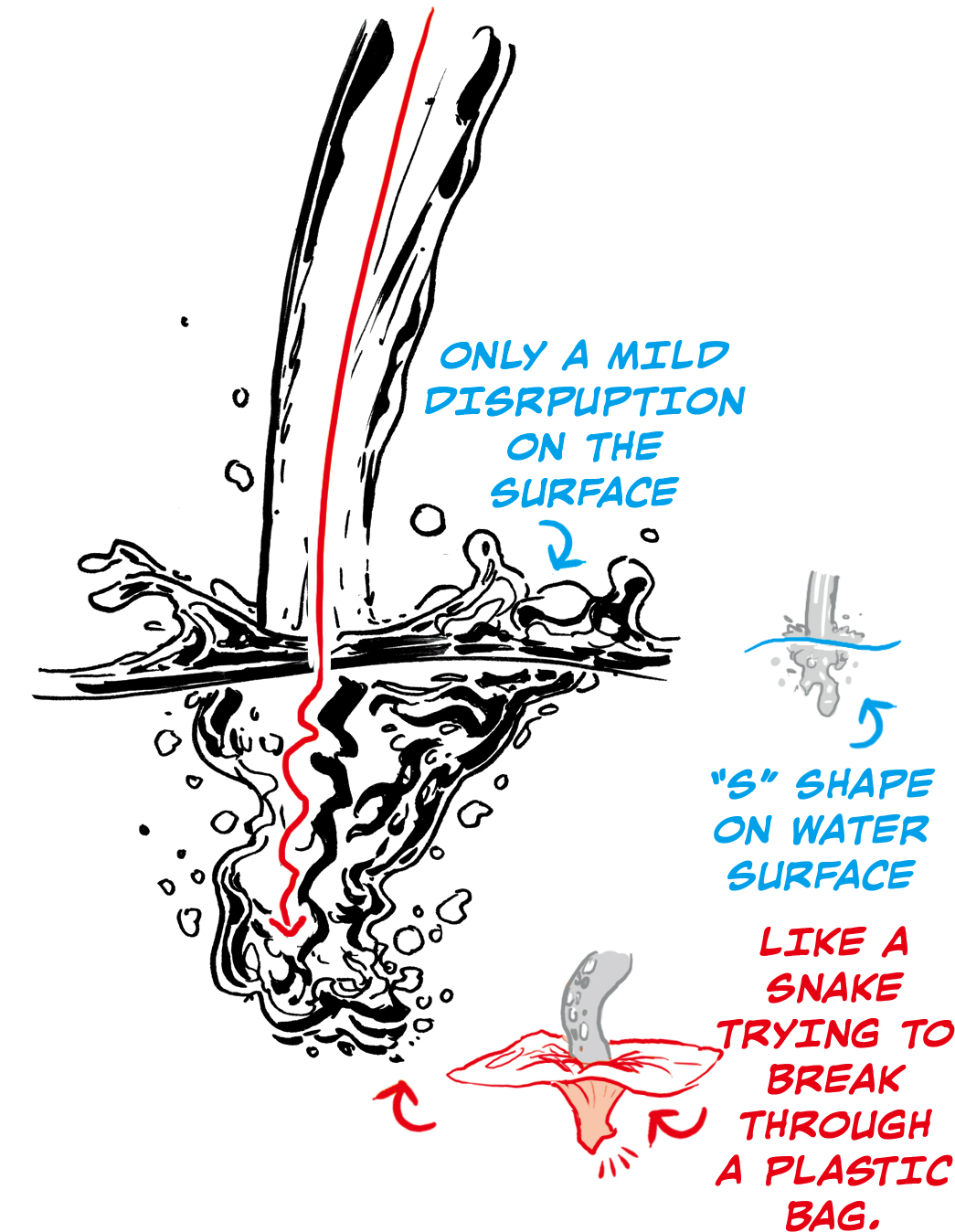
Subsequently the initial hit, the water beneath the surface churns into dissever bubbles.
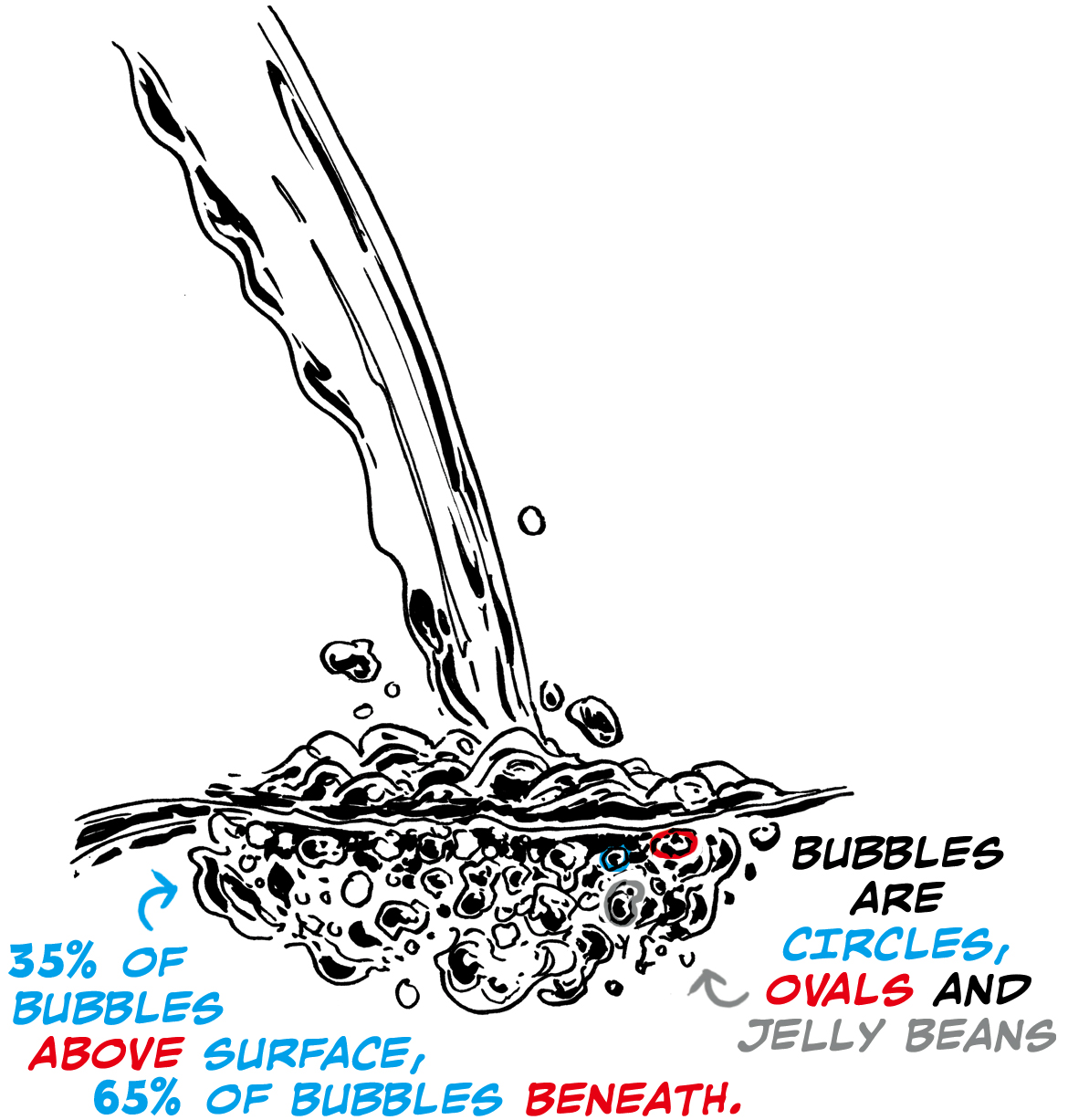
2. Ocean Waves
Waves are a rolling series of peaks and dips.
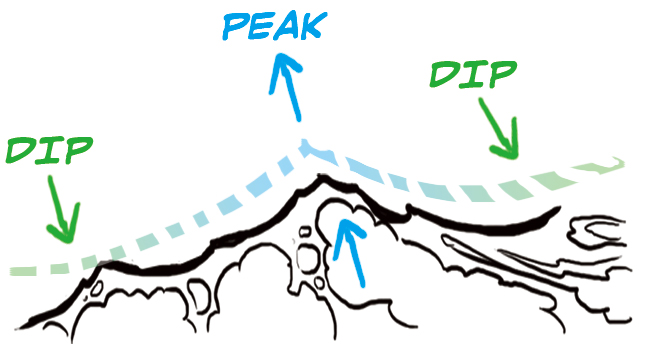
Stagger the peaks in a ZIGZIG pattern.
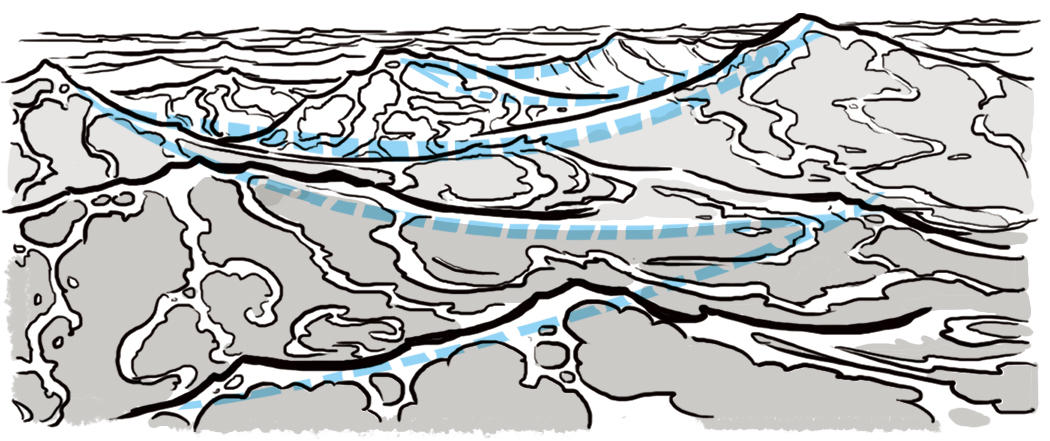
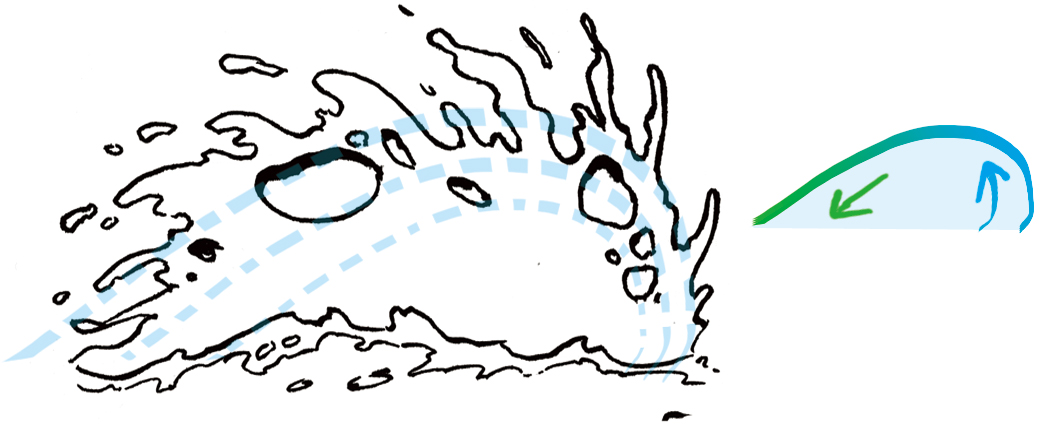
Use the foam lines to describe the movement and the form of the waves.
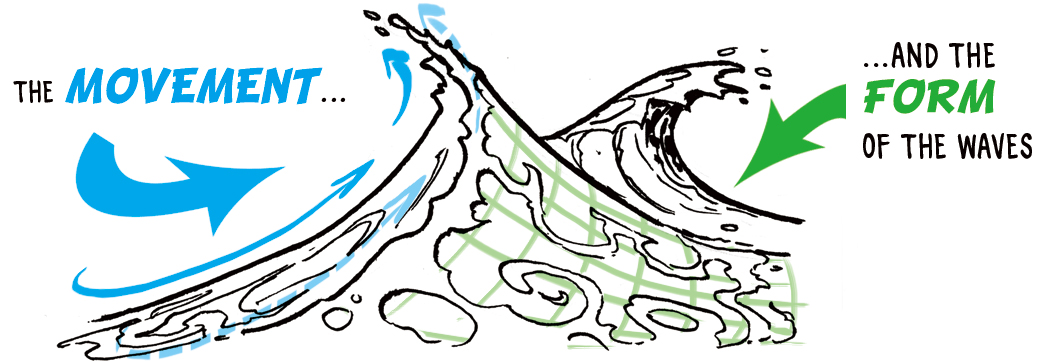
A moving object will button the h2o up beginning, and and so back.
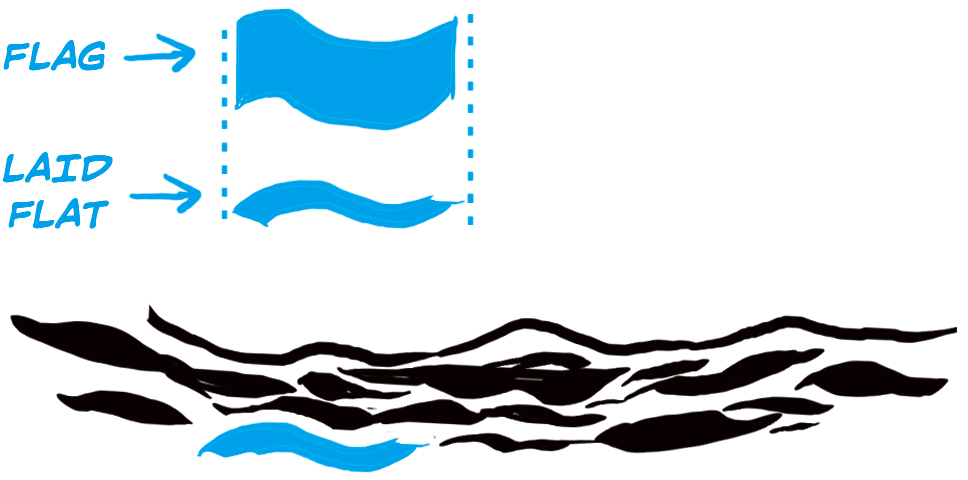
Water with a lilliputian movement can be divided up into a series of irregular flag shapes.
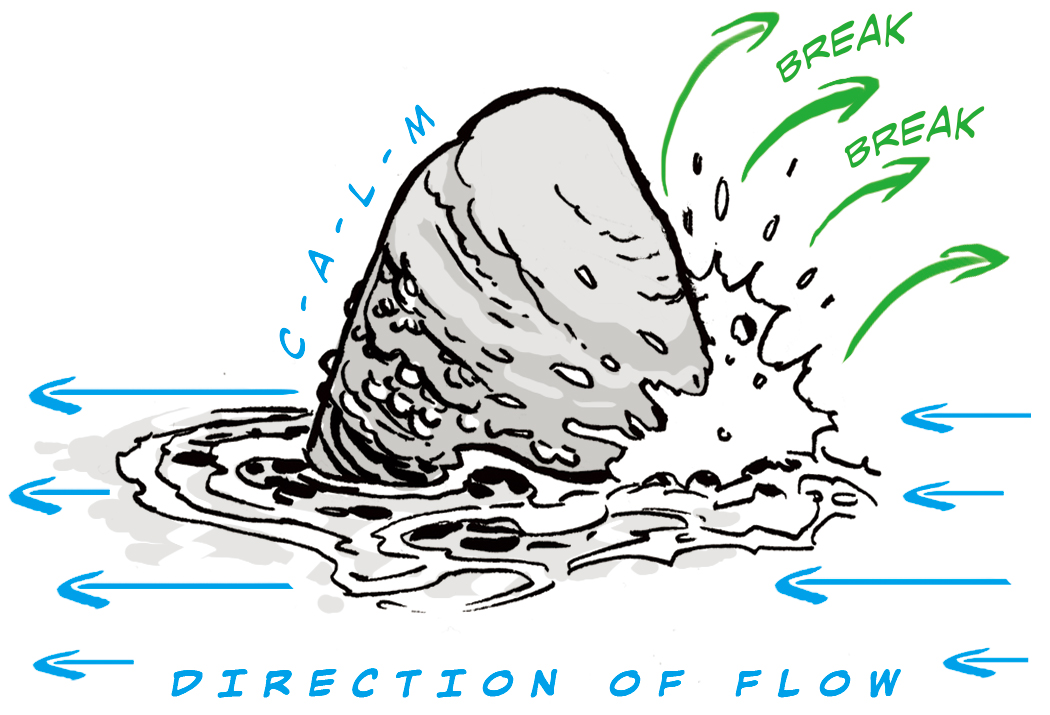
Bear witness sedate water's direction of flow by which side information technology breaks on fixed objects.
When an object hits the water the splash fans out.
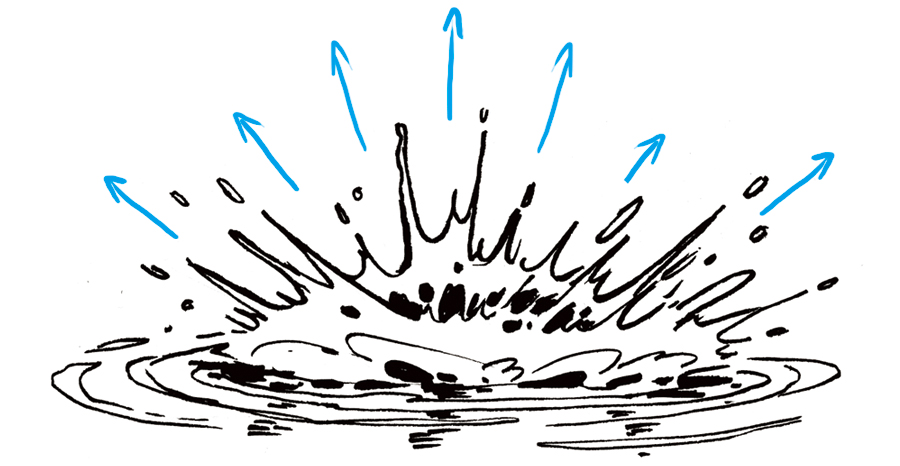
Very quickly the edges soften and scroll over.
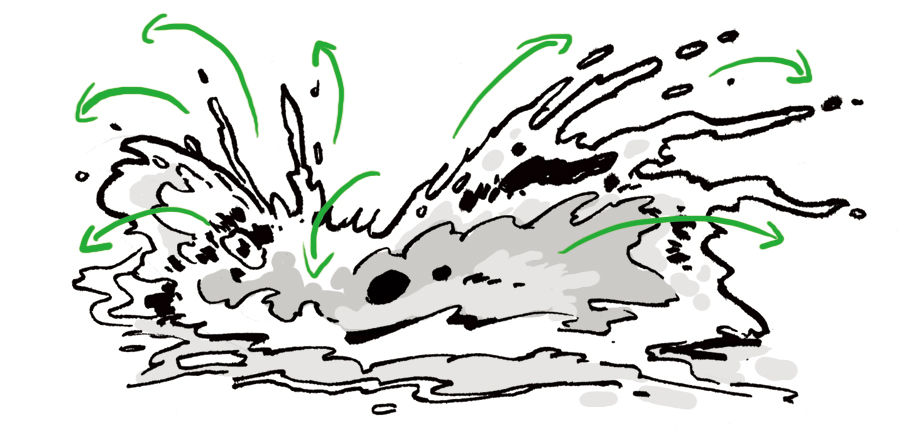
Somewhen, equally the water returns to stillness, ripples and small-scale bubbles remain.
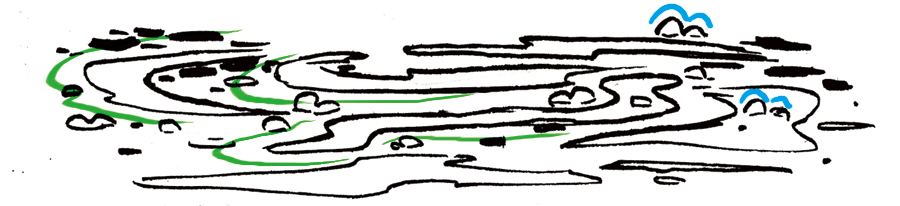
The foam lines are similar jagged lightning around misshaped jellybeans!
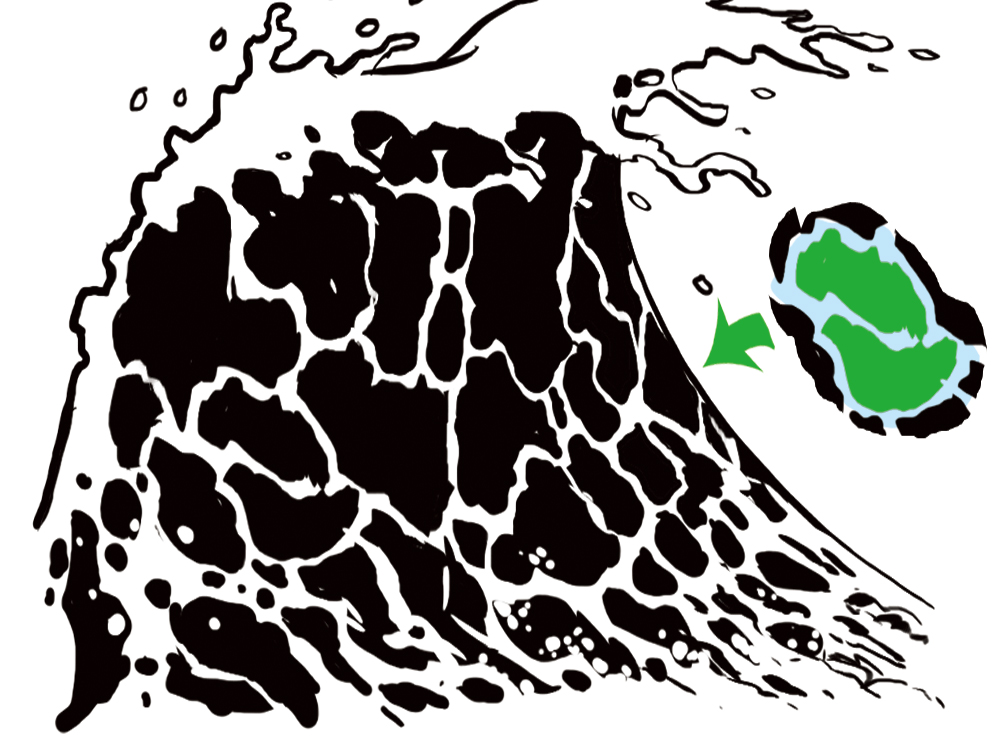
Stretched at the crest, compressed at the bottom.

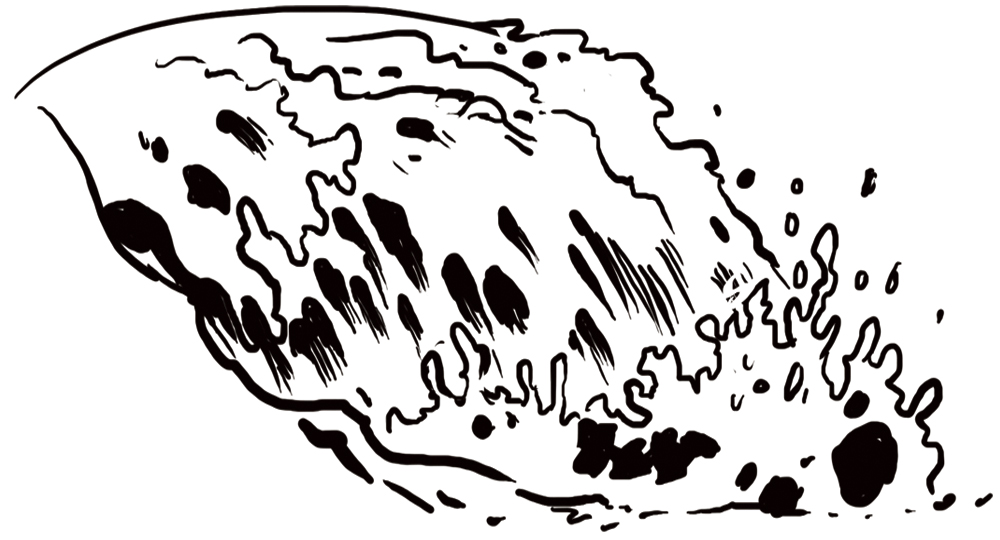
Utilize shadow inside the wave to suggest speed and depth.

Source: https://www.clipstudio.net/how-to-draw/archives/161599
Posted by: washingtondishemeard.blogspot.com
0 Response to "How To Draw Waves Breaking On The Beach"
Post a Comment